What to Look for When Booking a Desert Buggy Ride
Know the Terrain and What It Demands
Dubai's desert is not a flat sandbox. It rolls into steep dunes, drops into sudden bowls, and hides patches of soft sand that can catch out an inexperienced driver. Before you confirm any booking, get a clear picture of the route. Some operators stick to gentle, open areas where beginners can build confidence. Others push into the deep desert with sharp crests and long descents. Ask yourself which kind of experience you want. A guided tour that follows a set trail might suit a first-timer, while someone with off-road experience may prefer a more challenging loop. The terrain shapes everything else: the type of vehicle you need, the safety gear required, and the level of instruction you should expect. If the operator cannot describe the terrain in plain terms, that is a red flag.
Check the Vehicle Condition and Maintenance
A dune buggy takes real punishment. Sand gets into every moving part, heat stresses the engine, and repeated jumps strain the frame. A well-maintained buggy handles differently from one that has been run hard and parked without care. When you arrive, look at the machines. Are the tires worn unevenly? Does the steering feel loose? Do the brake pedals have a firm stop or do they sink to the floor? These checks matter because a mechanical failure mid-ride is not just inconvenient - it can be dangerous on a steep dune. Reputable operators keep service logs and rotate vehicles. If you see a fleet that looks neglected, consider whether the price is worth the risk. The best rental companies treat their buggies like aircraft: every trip begins with a pre-ride inspection.
Safety Gear and Harnesses
A desert buggy has no roof, no doors, and little protection beyond a roll cage and a harness. That harness is your main connection to the vehicle. Before you book, confirm what safety equipment is included. A proper four-point or five-point harness keeps you secured during sharp turns and sudden stops. The shoulder straps should sit flat, not twisted, and the buckle should click firmly. Helmets are standard, but not all helmets are equal. Look for a full-face design with a visor; sand kicked up by the buggy ahead can hit your face at speed. Goggles help, too. If the operator treats safety gear as optional or charges extra for it, move on. A guided tour should also include a safety briefing that covers hand signals, following distances, and what to do if you get stuck. That briefing is not filler - it is the difference between a controlled ride and a chaotic one.
Engine Power and Transmission Type
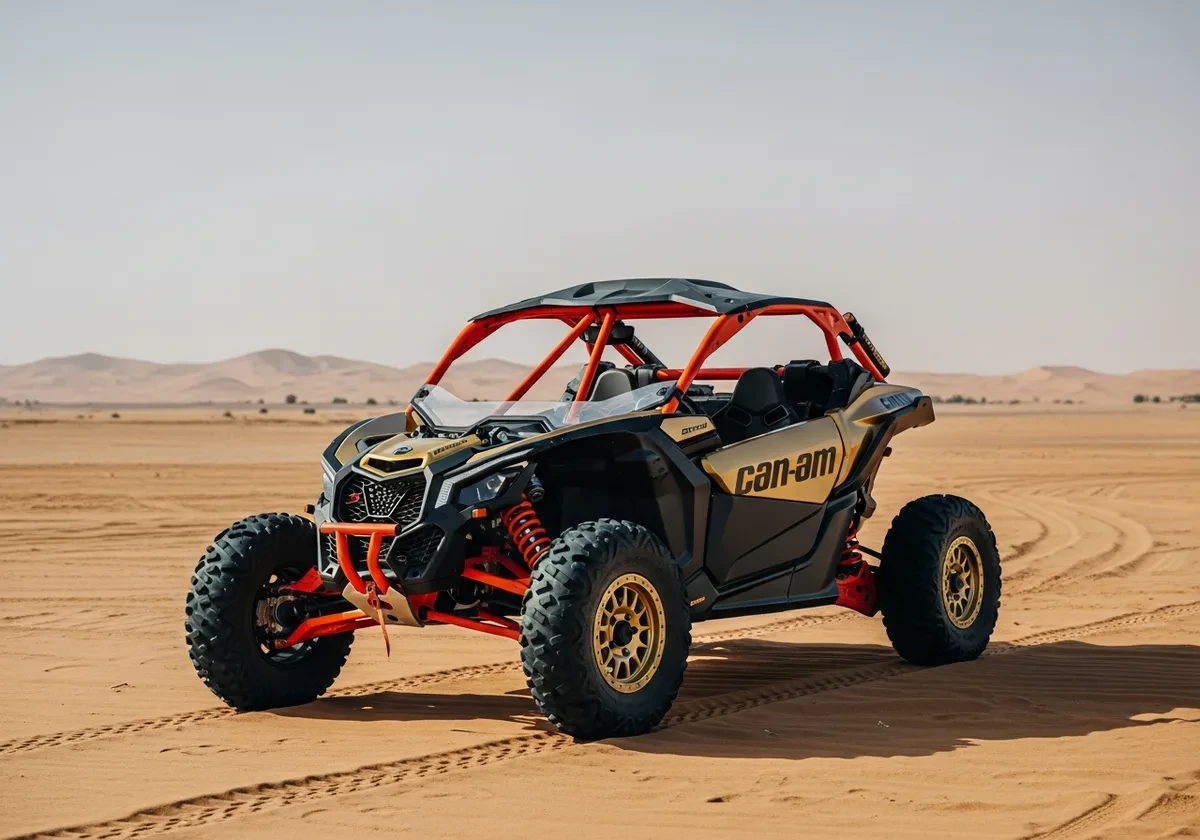
Buggy dubai rentals typically offer two engine options: a standard four-cylinder for relaxed cruising and a more powerful V6 or turbocharged unit for aggressive dune bashing. The choice depends on your driving style. A lower-powered buggy is easier to control on soft sand and suits riders who want to enjoy the scenery. A high-horsepower machine gives you the punch to climb steep faces and power out of bowls, but it demands more skill. Ask about the transmission, too. Automatic buggies are common and fine for most riders. Manual gearboxes give more control but require experience. If you book a powerful buggy without checking your own comfort level, you may spend the ride fighting the vehicle instead of enjoying it. Match the machine to your ability, not to the brochure.
Sand Tires and Tire Pressure
Tires are the single most important part of a desert buggy. Standard road tires dig into soft sand and bog the vehicle down. Proper sand tires are wider, with a tread pattern that floats on top of the dune. Even more critical is tire pressure. On hard ground, you run high pressure for stability. In deep sand, you drop the pressure to around 12-15 psi so the tire footprint expands and the buggy stays on top of the surface. A good operator will adjust tire pressure before every ride and carry a compressor to reinflate before you drive back on tarmac. If the buggy you are handed has street-pressure tires, expect to get stuck repeatedly. Ask the operator about their tire setup. The answer tells you whether they understand the environment or just rent out vehicles.
Rental Duration and What It Includes
Buggy rentals are usually sold by the hour or as half-day packages. But the clock can be misleading. A one-hour rental might include only 40 minutes of driving time once the safety briefing, helmet fitting, and transport to the dunes are factored in. Ask exactly what the time covers. Does it start when you leave the depot or when you hit the sand? Is the transfer time included? Some operators run a shuttle from the city to the desert, which can eat up a chunk of the booking. Also check what is included in the price: fuel, water, a guide, and basic insurance. Hidden extras can turn a cheap booking into an expensive one. A clear breakdown of the rental duration and inclusions prevents surprises and lets you plan your day properly.
Guided Tour vs. Solo Ride
Most visitors choose a guided tour, and for good reason. The desert is easy to get lost in, and dunes change shape with the wind. A guide knows the safe lines, the no-go zones, and the best spots for photos. A guided tour also adds a layer of security: if you roll a buggy or get stuck, help is nearby. Solo riding gives you freedom but requires navigation skills, a recovery kit, and a support vehicle. Unless you have desert driving experience, stick with a guided option. Even experienced riders often take a guide to learn new lines and avoid damaging the fragile desert floor. When you book, ask about the guide-to-rider ratio. One guide per five riders is manageable. More than that, and the group spreads out, making it hard to keep everyone safe.

Insurance and Liability
Off-road driving carries risk, and rental contracts reflect that. Before you sign, read the liability clause. Some operators hold you responsible for any damage to the buggy, even if it is caused by a hidden mechanical fault. Others offer a damage waiver for a fee that caps your liability. Check whether your travel insurance covers off-road vehicle hire. Many policies exclude it. If the operator requires a security deposit, find out the amount and how it is returned. A deposit that seems high may be normal for a powerful buggy, but it should be clearly stated upfront. Never assume you are covered. Ask directly: "What am I liable for if the buggy is damaged during the ride?" The answer should be straightforward, not vague.
Reviews and Operator Reputation
Online reviews give you a window into how an operator runs their business. Look for patterns. Do multiple reviews mention broken buggies, poor communication, or unsafe driving? That is a warning. Positive reviews that talk about well-maintained vehicles, clear instructions, and friendly guides are a good sign. But be wary of reviews that sound generic or overly polished. Real riders usually mention small details: the quality of the harness, the guide's patience, the condition of the tires. Those details are hard to fake. Cross-reference reviews across platforms. A operator with a perfect score on one site and mixed ratings elsewhere may be filtering feedback. Trust your gut. If something feels off during the booking process, it will probably feel worse on the sand.
Physical Preparation and What to Wear
Riding a buggy is more physical than it looks. Your arms work the steering wheel against the resistance of soft sand, and your core braces against every bump. A two-hour ride can leave you sore if you are not used to it. Dress for the conditions. Long sleeves and pants protect your skin from the sun and from sandblast if you follow another buggy closely. Closed-toe shoes with a good sole are essential; sandals or flip-flops are dangerous. Bring a scarf or a shemagh to cover your mouth and nose on dusty sections. Sunscreen is non-negotiable, even in winter. The desert sun reflects off the sand and hits you from below. Apply before the ride and bring a small bottle for a top-up during breaks. Being comfortable lets you focus on driving and enjoy the experience fully.
When to Ride: Timing and Season
Dubai's desert is best experienced between October and April, when temperatures are manageable. Summer rides are possible early in the morning, but the heat builds fast. Ask the operator about their preferred time slots. Sunrise and sunset rides offer dramatic light and cooler temperatures. Sunset rides are popular, so book ahead. Also consider the wind. A calm day gives you smooth sand and good visibility. A windy day can create dust clouds that reduce visibility and make the ride less enjoyable. Some operators monitor weather conditions and will reschedule if conditions are unsafe. That flexibility is a sign of a responsible business. If an operator insists on running regardless of weather, question their judgment.

Final Checks Before You Go
Once you have done your research, confirm the booking details in writing. Get the meeting point, start time, and contact number. Arrive early enough to inspect the buggy and ask last-minute questions. Trust your instincts. If the vehicle does not feel right or the guide seems rushed, speak up. A good operator will address your concerns. A bad one will brush them off. The goal is not just to drive a buggy in the desert - it is to drive one that is safe, well-maintained, and matched to your skill level. Taking the time to check these points before you book turns a gamble into a reliable plan.